
What to Wear on Camera for Video Shoots (Colours, Patterns and Wardrobe Tips)
Last updated: March 9, 2026

If you’re wondering what to wear on camera for a video shoot, start with clothing that helps you look clear, credible, and easy to follow on camera. You should be the focus, so your clothing should support what you’re saying rather than pull attention away from it. In many cases, that means choosing something that separates you from the background, avoids fine patterns, and still looks clear and flattering once filming starts. This guide is also a useful quick check for crews supporting someone in front of the camera.
This guide is designed first for anyone appearing on camera and choosing what to wear for a video shoot. It’s also useful for crews supporting someone on camera, and it sits within a wider setup process for lighting, sound and on-camera aesthetics.
Explore this guide
If you want a quick place to start, begin with Choose Colours That Create Clear Separation. It gives you the fastest wins for looking clear on camera and makes the rest of the guide easier to use.
Start with a Simple Pre-Shoot Wardrobe Plan
Most wardrobe problems are easier to prevent than fix. What looks good in a mirror can look very different once you’re in the real room with the background and lights in place. If an outfit suddenly looks dull, too warm, or slightly off on camera, colour temperature is often part of the reason.
Before recording, try to
bring two or three outfit options in different tones
compare options in the space where filming will happen, rather than choosing only at home
make the final choice after a quick preview
keep one backup option nearby
This helps you feel prepared and makes it easier for the crew to support you if a quick change is needed. If you’re unsure what the filming environment will be like, it’s worth checking in beforehand. The crew or brand organising the filming should usually be able to help with this.
Choose Colours That Create Clear Separation

Choose colours that create contrast with your background so attention stays on your face.
Good wardrobe colour usually helps you stand out clearly and keeps attention on your face.
A few practical rules tend to work well
if the background is dark, mid tones and richer colours often work better than black
if the background is light, deeper colours often help you stand out
tops close to the wall or chair colour can make the frame look flat
Muted and richer colours often work well because they add colour without stealing attention. Blues, greens, burgundy, rust, charcoal, and earthy tones are often reliable starting points.
Bright white and deep black aren’t always wrong, but they can be harder to manage. White may look too bright under stronger lights and black can lose detail in lower contrast setups.
If you’re choosing between several colours, a basic understanding of colour psychology can help you make a better first choice before recording.
Use Skin Tone as a Starting Point, Not a Rule
Skin tone can help narrow first options, but it isn’t a rulebook. Lighting, background colour, and camera settings can change how colours look on camera, so it’s still best to compare options in the actual filming space before recording.
In many cases, darker skin tones can look strong in rich, saturated colours and jewel tones, while lighter skin tones may find deeper mid tones and cooler or muted colours give clearer contrast without washing the face out. Medium and olive skin tones can often work well with earthy tones and richer colours.
These are starting points only. It’s worth comparing two or three options before recording.
Fabric, Patterns, and Accessories Can Change the Result Fast
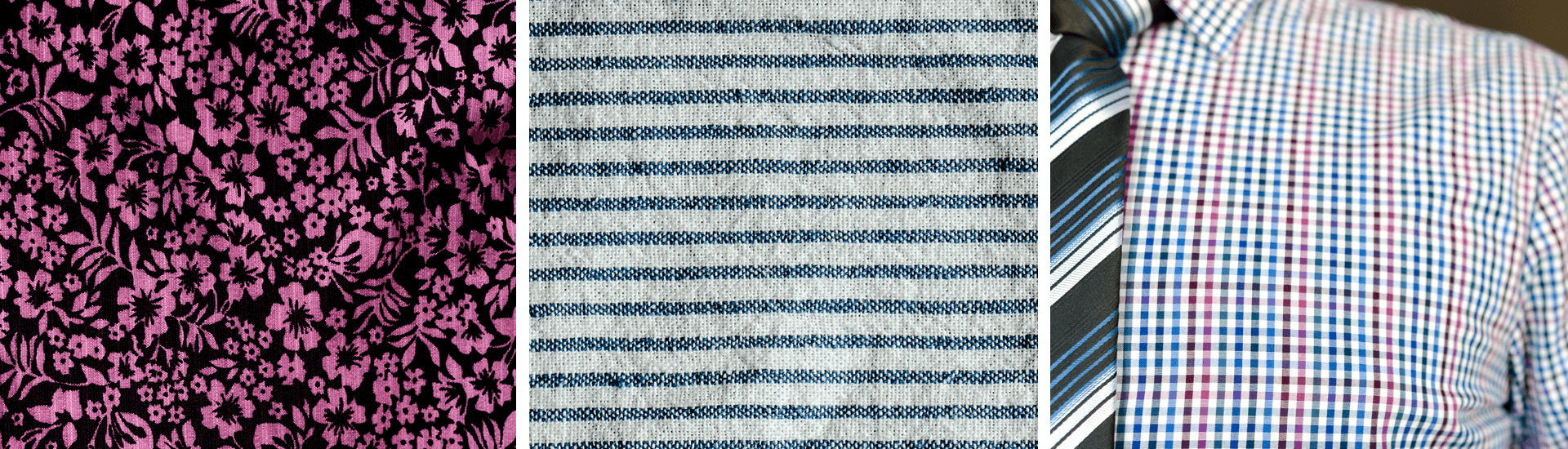
Busy patterns, fine stripes, and small checks can distract viewers or shimmer on camera, so plain clothing is often the safer choice.
Colour matters, but fabric finish and small details often cause the biggest distractions in playback.
matte fabrics usually behave more predictably than shiny fabrics
glossy fabrics can create bright patches under stronger lights
fine stripes, small checks, and tight repeating patterns can shimmer on camera
large logos and busy graphics can pull attention away from the speaker
jewellery can reflect light or create noise near the mic
Before recording, do a quick comfort check and ask for a short preview so you can spot anything distracting, such as glare, busy patterns, or reflective accessories.
Look Professional Without Looking Like a Costume
Wardrobe usually works best when it helps you look credible and feel comfortable at the same time. If you’re appearing on camera, think about the person, business, or organisation you’re representing because that will heavily shape what makes sense to wear.

Professional on-camera wardrobe can look very different depending on the person, role, and audience, so the goal is to look credible and comfortable rather than overly formal.
A common mistake is choosing something that looks formal enough on paper but feels unnatural once you’re speaking on camera. In many cases, a simpler outfit that fits the audience and lets you speak comfortably will work better than something that looks overly polished but feels like a costume.
Ask these quick questions before the final choice
Who is this video for?
What level of formality suits the context?
What would people expect from someone representing this business, team, or organisation?
Does the outfit help you move and speak comfortably?
What you wear should help people trust the message and focus on what you’re saying, not pull attention away from it.
Special Cases to Check Before Recording
Some setups need extra care because a clothing choice that looks fine in person can cause technical problems on camera.
Green screen
If you are being filmed with a green screen backdrop, avoid green clothing and reflective materials. Green clothing can disappear into the background during keying, and reflective fabrics can make edges around hair and shoulders harder to clean up.Uniforms or fixed brand clothing
If your clothing can’t change, don’t worry. It’s usually the crew’s job to handle the technical setup around it so you still look clear on camera. They may adjust the background, framing, or lighting to reduce glare, improve contrast, and keep attention on you while you focus on speaking.Outdoor filming
Outdoor filming can change how clothing looks and feels very quickly. Along with dressing for the temperature, it helps to think about wind, bright sunlight, and the background you’ll be standing in front of.avoid very reflective fabrics in direct sun
be careful with pure white in bright conditions
avoid loose jewellery or clothing that may move or make noise in the wind
choose footwear you can stand and move in comfortably
bring a simple extra layer in case the weather changes between takes
If you’re unsure what the location looks like, the crew or brand organising the filming should usually be able to help.
Quick Wardrobe Check Before Recording
A short wardrobe check is usually enough to catch the issues that show up most often on camera. The goal is to make a confident final choice, not to overanalyse the setup.
| Common question | Short answer | What to remember |
|---|---|---|
| What colours look best on camera? | Solid mid tones and richer colours often work well. | Choose colours that separate you from the background and keep focus on your face. Room colour matters too, so white against a white wall may look flat. If you can, ask the crew what the space looks like before recording. |
| Do colours depend on skin tone? | Yes, skin tone can help you choose a starting point. | Use skin tone as a guide, not a rule. Lighting and background can change the result, so compare a few options in the filming space if possible. |
| Should I avoid black and white clothing? | Not always, but both need a bit more care. | White may look too bright under stronger lights, and black can lose detail in low-contrast setups. |
| Are patterns always bad for video? | Not always, but fine repeating patterns are risky, so it’s usually safer to avoid them. | Small checks and fine stripes can shimmer on camera. If you’re unsure, plain clothing is usually the safer choice. |
| Should I wear branded clothing? | Usually avoid obvious branding unless it’s your brand or part of the brief. | Large logos and bold graphics can distract from your face and message. |
| Is jewellery a problem on camera? | It can be, especially around the neck and ears. | Jewellery can reflect light and may affect audio if it knocks against clothing or a mic. |
| What should I wear for a green screen shoot? | Avoid green clothing and reflective materials. | Green can disappear into the background, and shiny fabrics can make edge cleanup harder. |
| What should I wear for outdoor filming? | Dress for the weather, then plan for sun and wind. | Avoid reflective fabrics in direct sun, be careful with pure white, and avoid loose items that may move or make noise in the wind. Wear comfortable shoes and bring a light extra layer if you can. |
| Do I need more than one outfit option? | It’s usually a good idea. | Bring two or three options in different tones so you can choose what reads best in the actual room. |
| Should my clothing be pressed? | Yes, if possible. | Wrinkles can stand out more on camera than in person. Clean, pressed clothing usually looks more polished. |
| How formal should I dress? | Match the outfit to the audience, topic, and organisation you represent. | Choose something that looks credible and still feels comfortable to speak in. |
| What should I bring with me apart from clothes? | Bring a few simple touch-up items if you can. | Ask if there’ll be a mirror. If not, a pocket mirror, brush, and lint roller can help, especially with dark clothing. Not every crew will have a make-up artist. |
Quick Summary Before You Record
If you are appearing on camera, you usually do not need a perfect outfit. You need clothing that helps you look clear, credible, and comfortable while keeping attention on what you are saying.
A strong first choice is usually simple.
choose colours that separate you from the background
avoid fine patterns and busy graphics
be careful with shiny fabrics and reflective accessories
dress for the audience, topic, and organisation you represent
bring two or three options if you can
ask for a quick preview before recording if anything feels uncertain
If your clothing is fixed, such as a uniform or branded top, do not worry. The crew can usually adjust the setup around it so you still read clearly on camera.